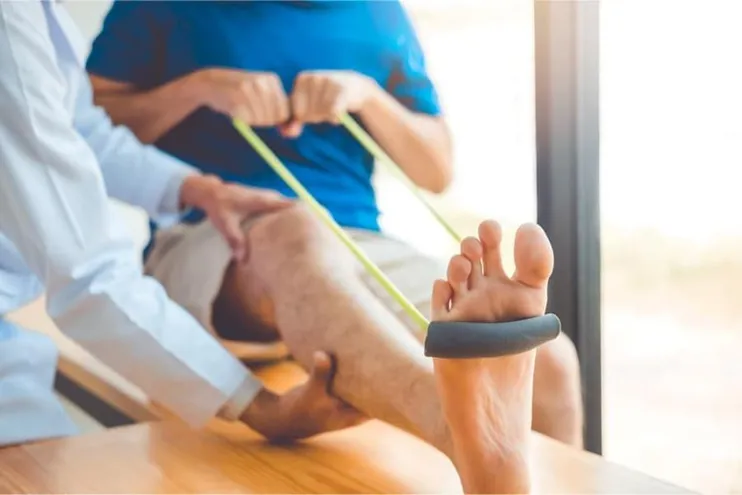
Low Tech Rehab refers to physical therapy or rehabilitation techniques that do not rely on high-tech equipment or devices. This enables and encourages the patient to easily replicate these rehabilitation techniques at home on their own. These techniques often involve manual therapy (such as manual stretching, joint mobilization, or massage), exercise, and movement training. The goal of low tech rehab is to help patients with musculoskeletal injuries recover from their injuries and return to normal function through simple, cost-effective, and accessible techniques.
Low tech rehab can benefit patients with musculoskeletal injuries in a number of ways, including:
- Improving range of motion: Manual therapy techniques can help to increase joint mobility, which can improve overall range of motion and reduce pain.
- Strengthening muscles: Low tech rehab often involves exercise and movement training, which can help to strengthen injured or weakened muscles and improve overall function.
- Reducing pain: Manual therapy techniques can help to reduce pain by decreasing muscle tension and promoting relaxation. Exercise and movement training can also help to reduce pain by improving function and reducing the need for compensation from other parts of the body.
- Improving function: By improving range of motion, strengthening muscles, and reducing pain, low tech rehab can help patients with musculoskeletal injuries to return to normal function and resume their daily activities.
What Is Low Tech Rehab? Low-Tech rehabilitation involves the use of exercise balls, rubber resistance bands, rubber exercise tubing, and balance boards are commonly used in rehabilitation for musculoskeletal injuries due to their versatility and ability to target specific areas of the body. Exercise balls: Exercise balls can be used for various exercises aimed at strengthening and improving the stability of muscles, especially those in the core. They can also be used for balance and coordination training. Rubber resistance bands: Rubber resistance bands provide resistance for strengthening exercises and can be used to target specific muscle groups, such as the shoulder, hip, and leg muscles. They are also portable and can be used for exercises at home or in the clinic. Rubber exercise tubing: Similar to rubber resistance bands, rubber exercise tubing can be used for strength training exercises and can target specific muscle groups. They provide resistance in multiple directions and can be used to target different areas of the body. Balance boards: Balance boards can help improve balance and stability, which can be especially beneficial for individuals recovering from lower limb injuries or conditions affecting balance. They can also be used to target specific muscle groups, such as those in the legs and core. Overall, these exercise tools can benefit the rehabilitation of musculoskeletal injuries by promoting strength, flexibility, stability, and balance, and can help to hasten the recovery process and improve overall function. And the best thing about “Low Tech” rehab is that you can easily learn these exercises and perform them when you’re at home or when you’re traveling and keep your injured areas strong and stable!
References
- Haldeman, S. (2002). Low-tech rehabilitation: evidence for its use in chronic pain management. Archives of Physical Medicine and Rehabilitation, 83(3), S42-S50.
- Ylinen, J., Häkkinen, A., Nykänen, M., Kautiainen, H., Takala, E. P., & Pohjolainen, T. (2007). Neck muscle training in the treatment of chronic neck pain: a randomized controlled trial: correction. Journal of the American Medical Association, 298(16), 1886.
- McHugh, M. P., & Cosgrave, C. H. (2010). To stretch or not to stretch: the role of stretching in injury prevention and performance. Scandinavian Journal of Medicine & Science in Sports, 20(2), 169-181.
- Hrysomallis, C. (2007). Balance ability and athletic performance. Sports Medicine, 37(6), 547-556
- Pfeiffer, R. P., & Mangus, B. C. (2008). The role of eccentric exercise in sport injury prevention and rehabilitation. Strength and Conditioning Journal, 30(6), 44-54.
- Kahanov, L., Eberman, L. E., Games, K. E., Wasik, M., & Smith, M. S. (2012). Diagnosis, treatment, and rehabilitation of stress fractures in the lower extremity in runners. Open Access Journal of Sports Medicine, 3, 69-76.